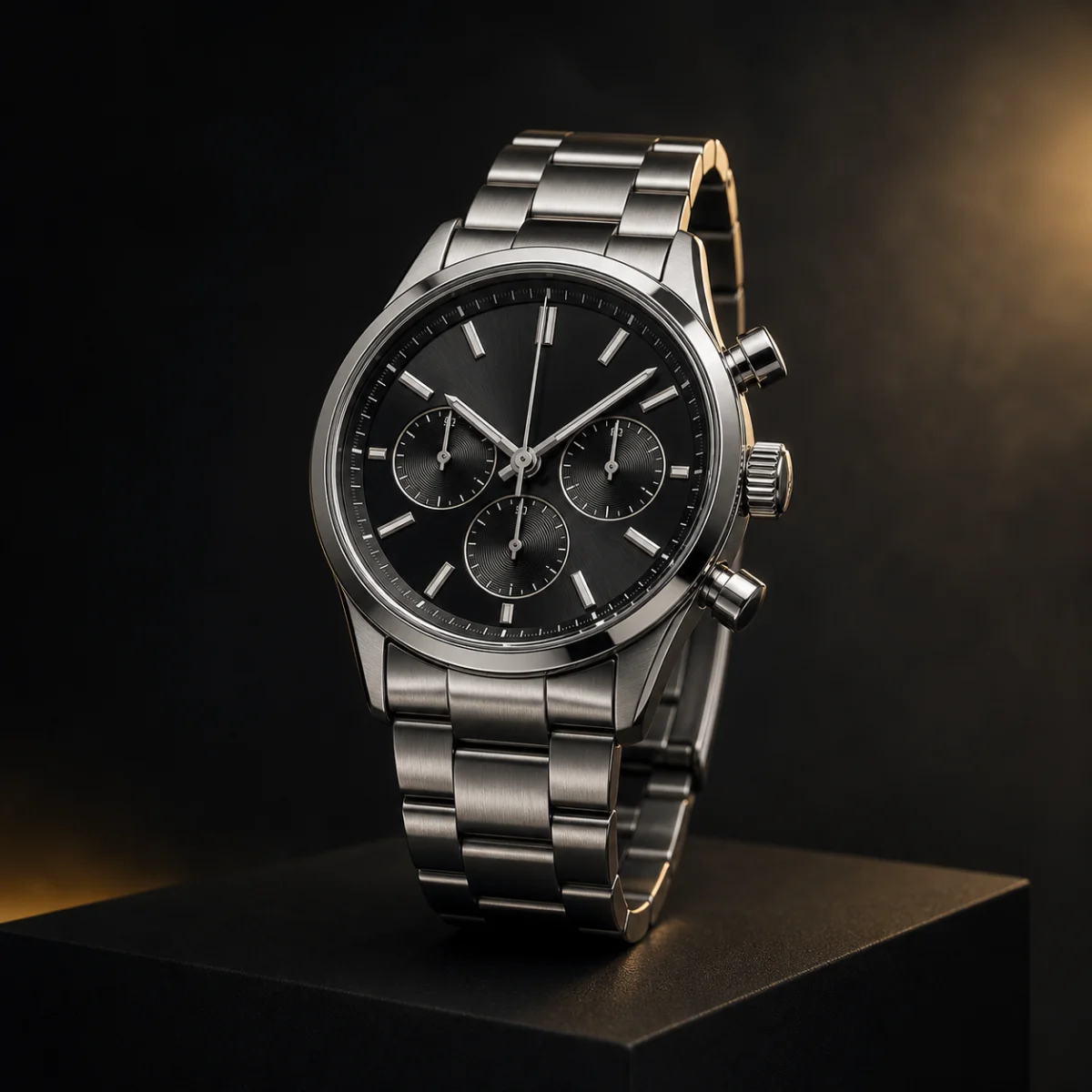
A chronograph adds a controllable timing system to the normal timekeeping movement. Pressing a pusher initiates a coordinated sequence of levers, wheels, clutches, and reset components.
The Clutch
The clutch connects the chronograph mechanism to the movement’s running train. Horizontal clutches are visually expressive and show the engagement clearly, while vertical clutches can provide a smoother start and allow the central chronograph seconds hand to run with less visible jump.
Column Wheel Or Cam Control
A column wheel coordinates lever positions through precisely shaped columns and is often valued for tactile pusher action and traditional construction. Cam-actuated systems perform the same control task through shaped components and can be robust, efficient, and easier to industrialize.
Counters And Reset
Elapsed seconds, minutes, and sometimes hours are recorded through dedicated wheels and displayed on subdials. When the reset pusher is pressed, hammers fall onto heart-shaped cams and return the hands to zero. Correct alignment depends on careful adjustment.
What The Owner Notices
The user experiences pusher weight, start-up behavior, hand alignment, dial readability, and the effect of the complication on case thickness. Movement architecture matters, but the complete watch should still make the timing function intuitive and pleasant to use.