
Two watches can share the same category and still express completely different priorities. Understanding those priorities is more useful than deciding which brand is universally “best.”
Divers: Utility And Identity
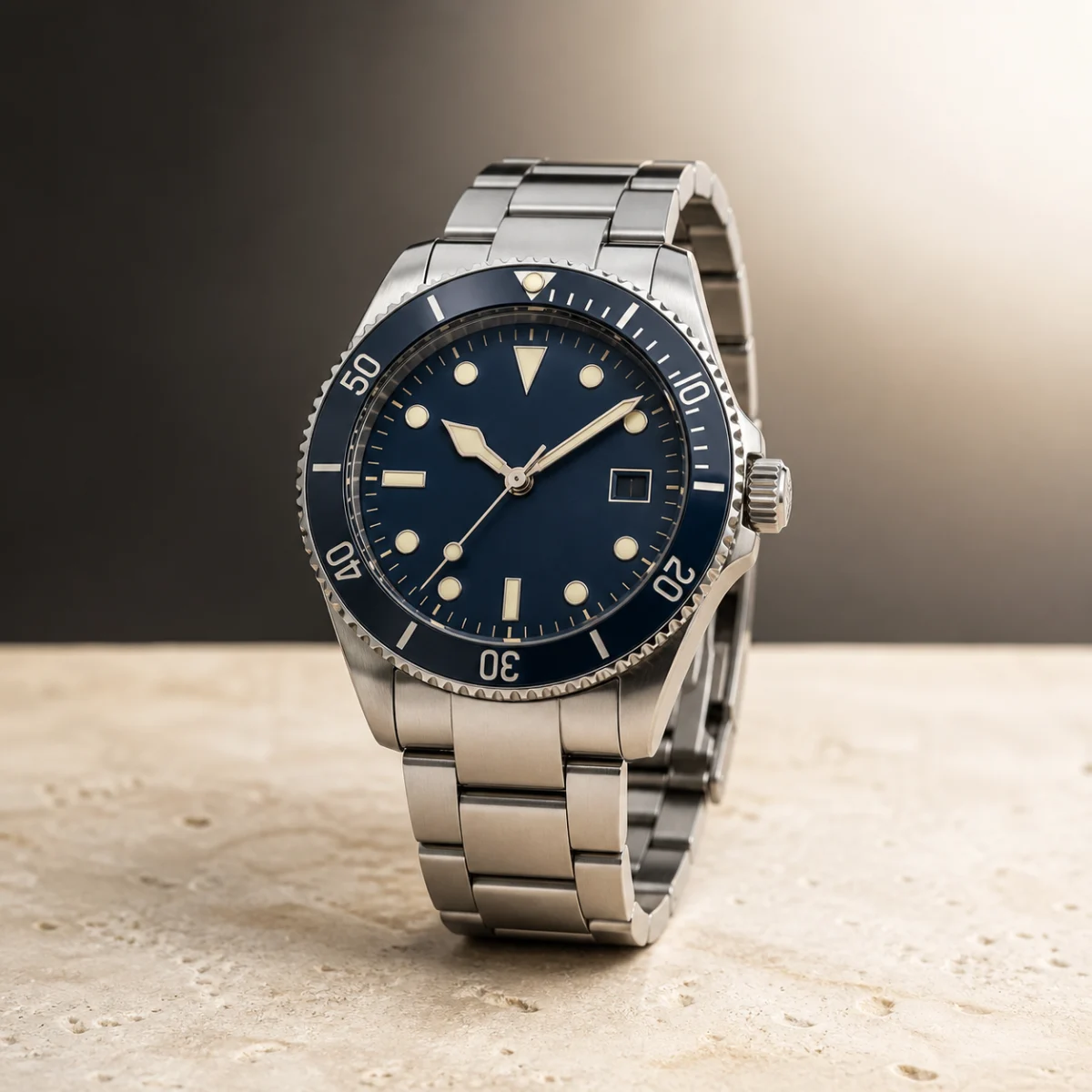
Dive watches typically combine timing bezels, strong legibility, secure crowns, and meaningful water resistance. One interpretation may emphasize professional-tool clarity, another polished versatility, and another material innovation. The right choice depends on whether the buyer values compact wear, visual presence, depth capability, or everyday flexibility.
Chronographs: Display And Interaction
Chronographs vary in dial density, movement architecture, pusher feel, timing scale, and historical association. A racing-inspired design creates a different experience from an aviation chronograph or a restrained two-register model. The complication should remain readable and enjoyable to operate.
Integrated Sports Watches: Architecture First
In an integrated-bracelet watch, case and bracelet are designed as one visual object. Surface transitions, link articulation, clasp proportions, and bezel geometry matter as much as the dial. Small differences in taper and thickness can transform comfort.
Dress Watches: Restraint Reveals Detail
Formal watches rely on proportion, dial finish, hand shape, and case profile rather than obvious technical cues. Their apparent simplicity makes execution more visible. A successful dress watch feels intentional from every angle and remains comfortable under a cuff.