
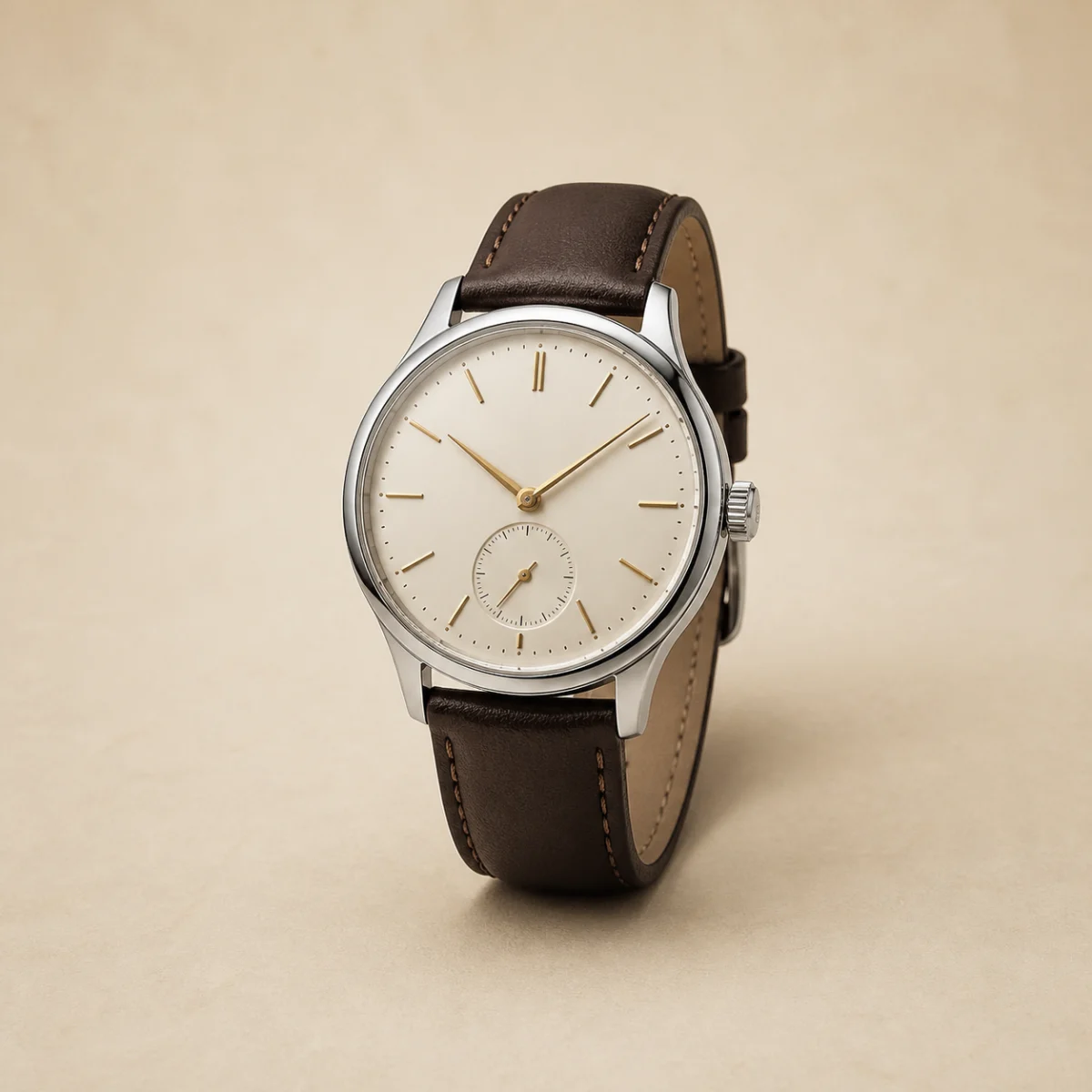
Both automatic and manual-wind watches store energy in a mainspring and regulate its release mechanically. The difference is how that energy is replenished and how the owner interacts with the watch.
Automatic Winding
An automatic movement uses a weighted rotor that turns with wrist motion and winds the mainspring through a gear train. For a regularly worn watch, this reduces the need for daily winding. Rotor construction can add thickness and may partially cover the movement when viewed through a display back.
Manual Winding
A manual-wind movement is wound through the crown. Many owners value the tactile ritual and direct awareness of the watch’s energy. Without a rotor, the movement can be slimmer and its architecture more visible, although the owner must remember the winding interval and avoid forcing the crown after resistance increases.
Power Reserve And Routine
A longer power reserve provides flexibility, especially when rotating several watches. It does not automatically indicate superior quality. Stable delivery of energy, winding efficiency, movement construction, and service support are equally important.
Choosing By Ownership Style
Choose automatic winding for convenience and frequent wear. Choose manual winding if the interaction itself is part of the appeal or if slim proportions and movement visibility matter. Neither system is inherently more prestigious; each supports a different rhythm of ownership.