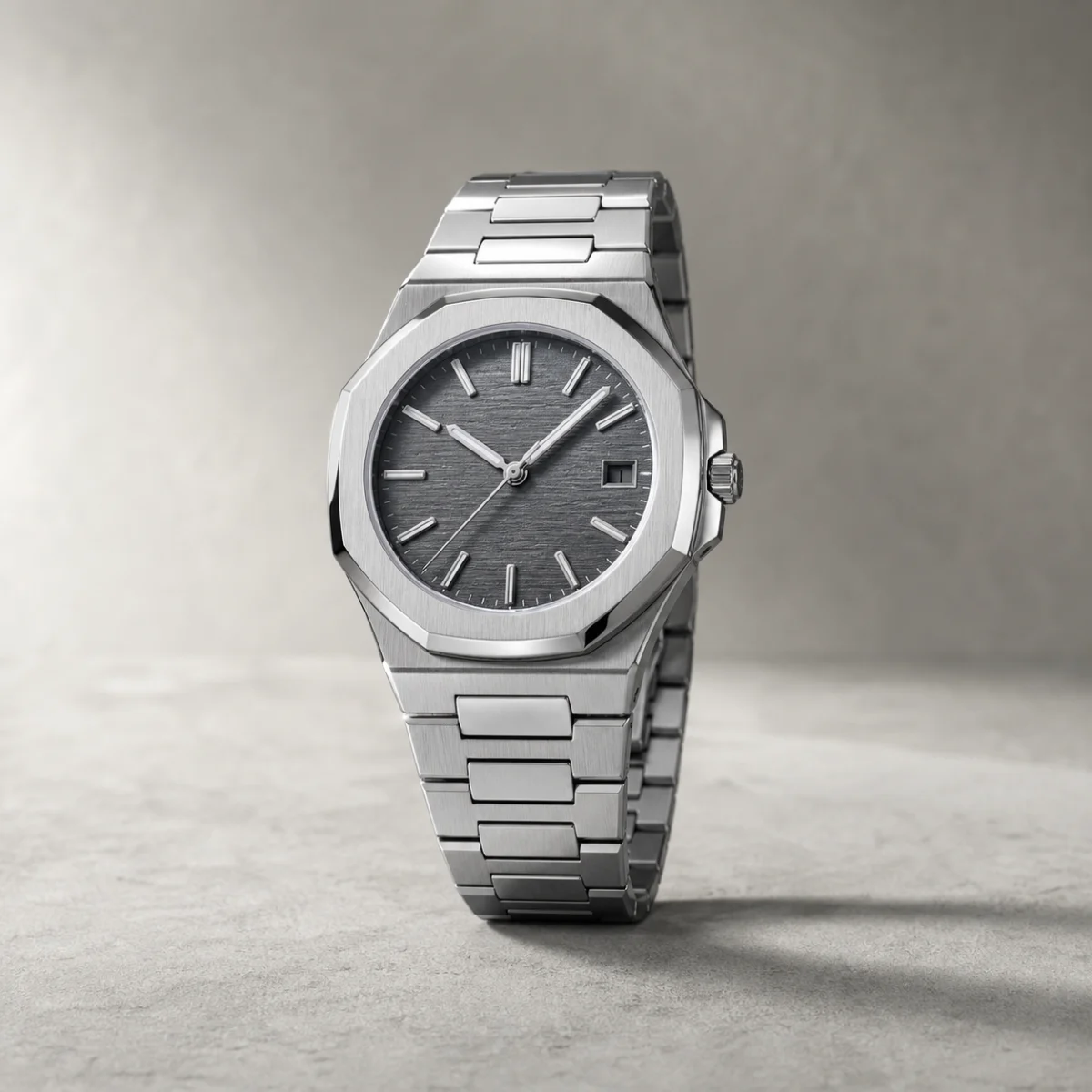
A case measurement is useful, but a single number cannot describe how a watch will wear. Fit is the result of several dimensions interacting with the shape of the wrist and the construction of the strap or bracelet.
Diameter Sets The General Scale
Diameter describes the width of a round case excluding the crown. It helps separate compact, traditional, and contemporary proportions, but it does not explain how much of the wrist the watch occupies. A broad bezel can make the visible dial feel smaller, while a thin bezel can make the same diameter look larger.
Lug-To-Lug Controls Wrist Span
Lug-to-lug length measures from the tip of the upper lugs to the tip of the lower lugs. If that distance extends beyond the flat part of the wrist, the watch can appear oversized or feel unstable. Curved lugs and articulated end links can improve fit, while fixed or projecting end links can increase the effective span.
Thickness Changes Presence
Thickness affects cuff clearance and the watch’s center of gravity. A thick watch with a small footprint may still feel top-heavy, while a larger but thinner watch can sit closer and feel more balanced. Domed crystals, protruding casebacks, and tall bezels all contribute to the profile.
Compare With A Known Reference
Measure a watch that already fits well, then compare diameter, lug-to-lug length, thickness, bracelet articulation, and clasp footprint. Photographs taken straight on can be misleading; side views and wrist shots at a normal distance provide better context.